
The most important Python features for AI engineering
Knowing these will give you a huge advantage, even if you aren't a Python programmer.


I am not a Python developer. My main area of expertise is .NET. However, as an AI engineer, I interact with Python often, because it happens to be the most dominant language in the AI, machine learning, and data science ecosystem. This is why I came to believe that it would tremendously help you if you know some Python if you want to work in the area of AI engineering, even if you don’t intend to become a Python developer.
Here are some examples from my own work:
I translated Python code written by data scientists that interacts with their ML model into production-ready C# that the rest of the application back-end was written in.
I collaborated with data science teams and AI researchers and wrote Jupyter notebooks and a Streamlit applications to analyze the accuracy of semantic search functionality.
I extended features of existing Python-based serverless applications, such as AWS Lambda and Azure Functions.
I translated Python-based curriculum for a major online computer science academy into C# equivalent.
The list goes on.
So, there’s no question that knowing Python would be useful. It absolutely would be. The real question is, where do you start if your Python knowledge is currently limited or non-existent?
The worst thing you can do is go through one of the beginner-level tutorials online. Those are only helpful if you are completely new to coding. Would be waste of time otherwise. As an experienced programmer (and especially with the help of AI tools), you will be able to infer the structure of the code and how basic building blocks work.
The best way would be this:
Knowing the most important areas to focus on.
Look at the real production code.
In this article, I will help you with the former. Here, I outlined 10 the most important areas to study if you want to master Python skills rapidly.
Priority areas to study
1. Core Python fluency
You should be very comfortable with:
list,dict,set,tuple, slicing, unpackingcomprehensions and generator expressions
functions as first-class objects
decorators
context managers:
with,__enter__,__exit__iterators, generators,
yieldexception handling, including custom exceptions
modules, packages, imports, virtual environments
object-oriented Python, especially
@dataclass
Coming from C# or any other language background, pay special attention to Python’s reference semantics, mutability, truthiness, dynamic typing, and duck typing. Many tests check whether you understand Python’s “runtime behaviour,” not just syntax.
2. Type hints and modern Python typing
Agentic systems often pass structured messages, tool inputs, tool outputs, state objects, and config objects around. You should be fluent with:
from typing import Protocol, TypedDict, Literal, Optional, Callable, Iterable, Sequence, TypeVarKnow when to use:
list[str],dict[str, Any]TypedDictfor dictionary-shaped datadataclassfor lightweight internal data objectsProtocolfor structural interfacesLiteralfor constrained valuesCallablefor tool/function signatures
Python’s typing system is standardized through PEPs and is designed to work across type checkers, so modern Python roles increasingly expect you to write typed Python even though types are not enforced like C# at compile time.
3. Async Python
This is probably the highest-value area for agentic AI work.
You should understand:
async def
await
asyncio.gather
asyncio.create_task
asyncio.TaskGroup
asyncio.timeout
async context managers
Agentic systems spend a lot of time waiting on model calls, vector DB queries, web requests, tools, file I/O, and APIs. Python’s asyncio supports structured concurrency through TaskGroup, and failed grouped tasks raise ExceptionGroup, which is important for robust orchestration.
You should be able to write something like:
async def run_tools(tools: list[Callable[[], Awaitable[str]]]) -> list[str]:
    async with asyncio.TaskGroup() as tg:
        tasks = [tg.create_task(tool()) for tool in tools]

    return [task.result() for task in tasks]
Also know the difference between:
concurrency vs parallelism
CPU-bound vs I/O-bound work
asyncio.to_thread()for wrapping blocking callscancellation and timeouts
why blocking calls inside
async defare dangerous
4. Data validation with Pydantic
For AI agents, Pydantic is extremely important because tool inputs, model outputs, API payloads, and configs need validation.
Focus on:
from pydantic import BaseModel, FieldStudy:
BaseModelfield validation
nested models
enums / literals
JSON serialization
parsing untrusted input
model validation errors
strict vs coercive validation
Pydantic models validate untrusted data and produce objects whose fields conform to declared types, which maps directly to validating LLM outputs and tool arguments.
Example:
from pydantic import BaseModel, Field

class SearchRequest(BaseModel):
    query: str = Field(min_length=1)
    max_results: int = Field(default=5, ge=1, le=20)
5. Tool/function design
Agentic AI systems are often built around giving an LLM access to tools. You should be able to write small, pure, well-described Python functions with clear inputs and outputs.
Practise writing functions like:
def calculate_invoice_total(items: list[float], tax_rate: float) -> float:
    if tax_rate < 0:
        raise ValueError("tax_rate cannot be negative")
    return round(sum(items) * (1 + tax_rate), 2)
Then practise wrapping them with Pydantic input models.
OpenAI’s Agents SDK, for example, supports turning Python functions into tools with schema generation and Pydantic-powered validation; it also supports agents, handoffs, guardrails, sessions, and tracing.
6. Agent orchestration concepts in Python
You do not need to memorize every framework, but you should understand the programming patterns behind them:
agent loop: observe → reason → act → observe
tool calling
structured outputs
retries
state management
guardrails
human-in-the-loop flows
handoffs between specialized agents
tracing and logging
OpenAI’s Agents SDK uses Agent and Runner abstractions to manage turns, tools, guardrails, handoffs, and sessions. LangChain’s Python agent docs similarly describe agents that use tools, where tools can be plain Python functions or coroutines.
7. HTTP APIs and service integration
Agentic AI roles usually involve connecting agents to external systems. Study:
httpxoraiohttpREST calls
timeouts
retries
authentication headers
pagination
JSON handling
error handling
FastAPI is also worth learning because it is widely used for Python services and is built around Python type hints and Pydantic-style models for request/response validation.
8. Testing
Be ready to write tests for:
normal cases
edge cases
exceptions
async functions
mocked API/model/tool calls
validation failures
Focus on:
pytest
pytest.mark.asyncio
unittest.mock
monkeypatch
fixtures
For agentic systems, tests often check that the right tool was called, bad model output is rejected, retries happen correctly, and state transitions are valid.
9. File, JSON, and configuration handling
Know how to work with:
pathlib.Path
json
os.environ
dotenv-style config
yaml / toml basics
You should be able to safely load config, read files, chunk text, write output, and avoid hardcoding secrets.
10. Packaging and project structure
Learn the Python equivalent of what you already know from .NET project organization:
pyproject.tomlvirtual environments
dependency management
package layout
relative vs absolute imports
linters and formatters:
ruff,blacktype checking:
mypyorpyright
Mini practice project
The quickest way to learn any skill is to practice it. Therefore, here’s an idea for you on a project you can build:
A Python agent-style CLI that takes a user question, decides whether to call a calculator tool, search tool, or file-reading tool, validates all tool inputs with Pydantic, runs I/O asynchronously, logs each step, and has pytest tests for successful and failing tool calls.
That one project would exercise most of the Python skills likely to matter for an agentic AI proficiency.
Wrapping up
If you want some realistic agentic AI Python code to play with to learn the concepts we covered in this article, then I have good news for you.
I have created a short introductory course on event-driven agentic AI. The course became popular on Pluralsight and made it into the top 2% courses on the platform. Since Python is the most popular programming language in AI engineering and the course is not about any particular technology, I decided to do all code samples for this course in Python. If you enroll, you will be able to download all these code samples, play with them, and connect them to real LLMs. It’s available here:
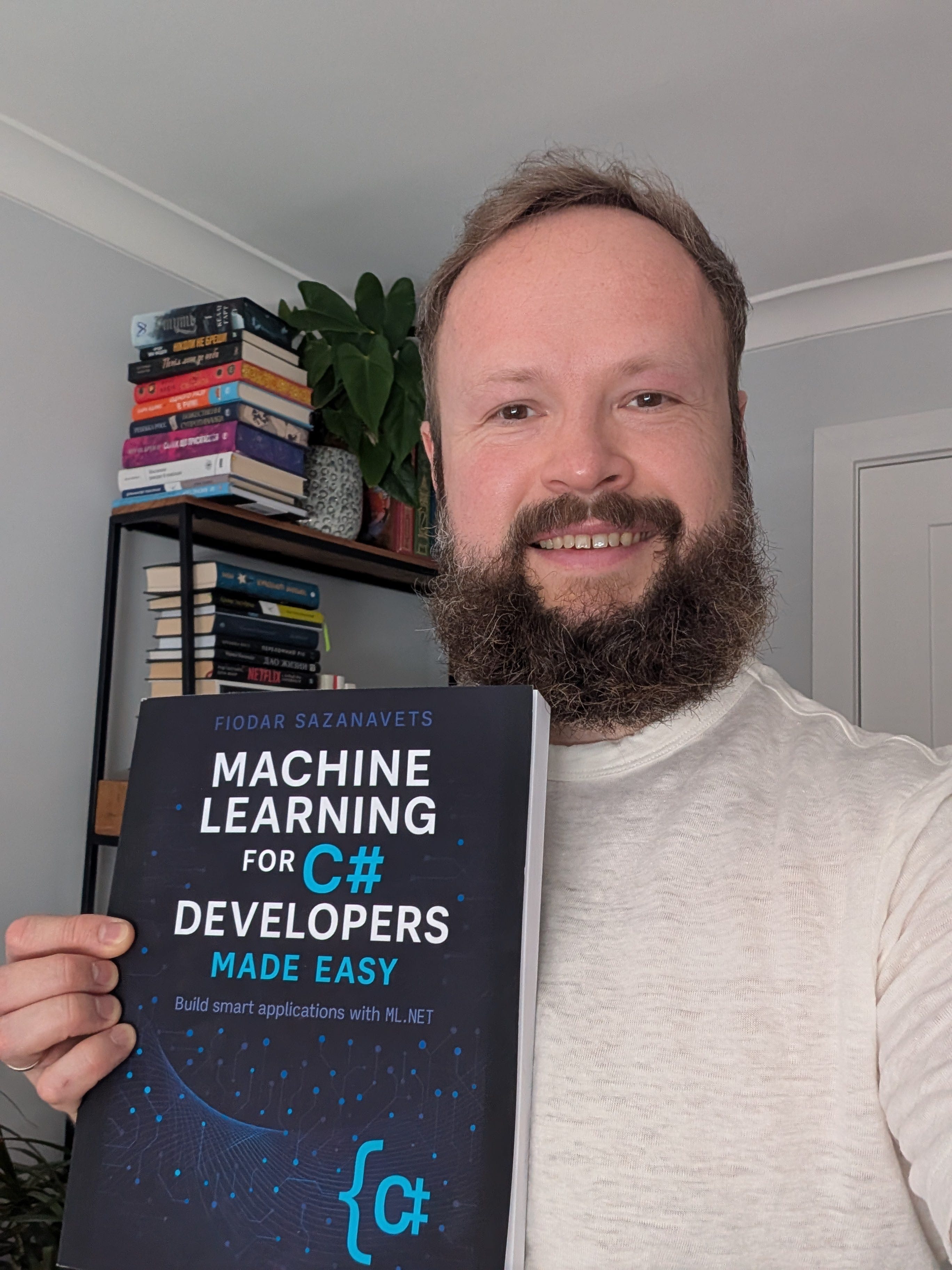
Another good news is that, while knowing Python would give you a noticeable advantage in an AI-related career, it’s not strictly necessary. For example, if you are a C# developer, you can do both AI engineering and machine learning entirely in C#. If you want to learn how to do machine learning with C#, I wrote a book that explains it.
Machine Learning for C# Developers Made Easy
It’s available on LeanPub and Amazon.
Finally, if this article becomes popular, then, in the next article, I will cover some advanced Python concepts that would be helpful for you to learn.